

The Main Principles of Fine Art Photography.
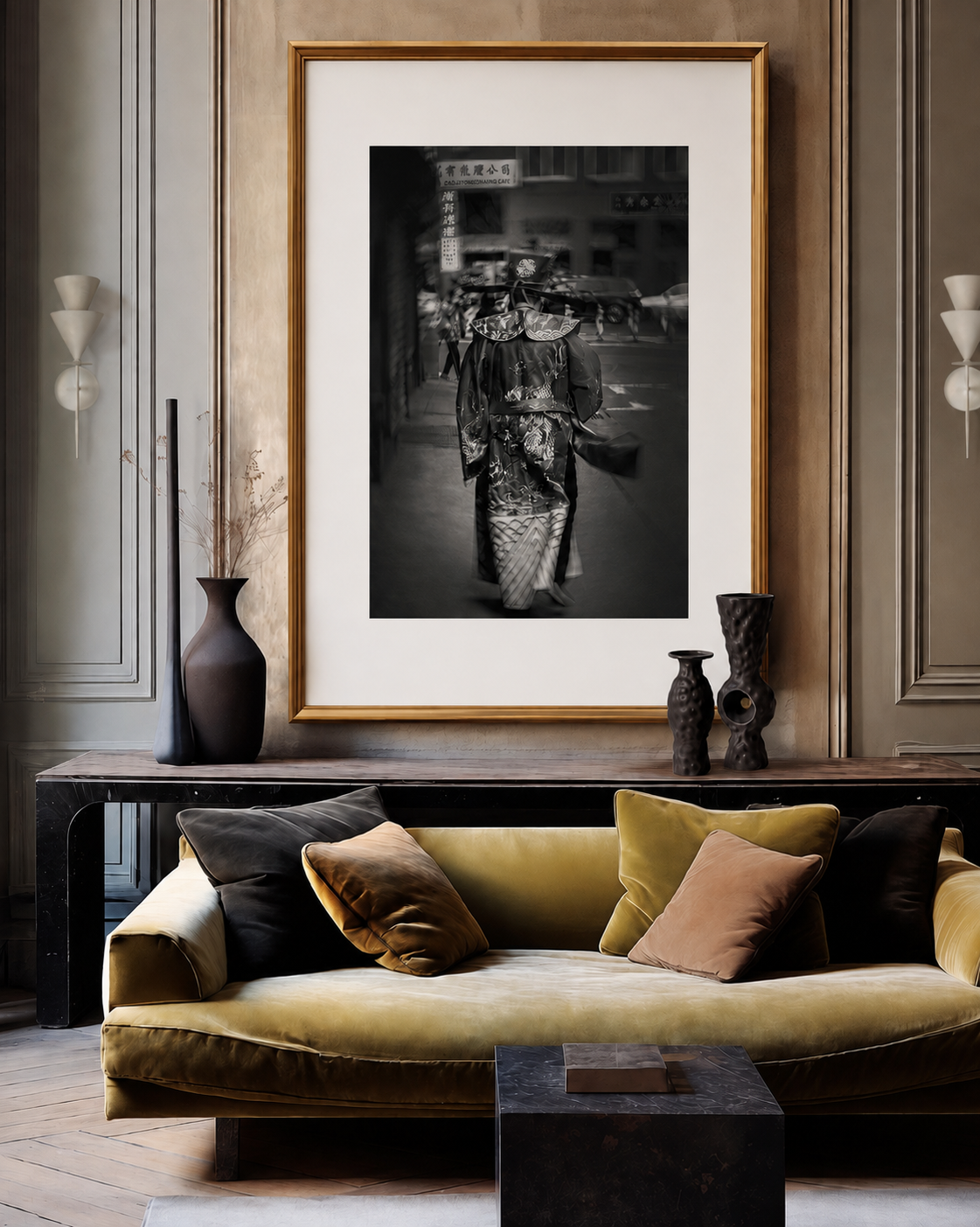
A Fine Art Photograph is not simply taken. It is discovered, interpreted, and shaped.
Fine art photography begins long before the shutter is released.
It begins with attention—with the ability to pause, observe, and recognize meaning in something others may pass without noticing. A reflection disappearing across a window. A solitary figure beneath the architecture of the city. The final light resting on a building before evening arrives.
Unlike photography created simply to document what is present, fine art photography seeks to express what is felt. The camera records the visible world, but the photographer gives that world emotion, memory, and intention.
Vision Before Technique
Technical knowledge is essential, but technique alone does not create art.
A perfectly exposed image may still say very little. Fine art photography begins with a personal vision: a distinctive way of interpreting light, space, people, movement, and time.
The photographer must ask not only, What am I looking at? but also, Why does this moment matter to me?
Vision transforms an ordinary subject into something intimate. It reveals the invisible relationship between the photographer and the world being photographed. Over time, this perspective becomes an artistic language—a visual signature that can be recognized beyond any single image.
Intention
Every meaningful photograph carries intention.
The subject may appear spontaneous, but the artist’s choices are deliberate: where to stand, what to include, what to leave outside the frame, when to wait, and when to release the shutter.
Intention does not mean that everything must be controlled. Some of the most compelling photographs emerge from uncertainty and chance. Yet even within the unexpected, the photographer remains attentive, searching for a moment that corresponds with an inner idea or emotion.
A fine art photograph is not simply taken. It is discovered, interpreted, and shaped.
The Art of Seeing
To photograph deeply, one must first learn to see.
Seeing is different from looking. Looking identifies a street, a person, or a building. Seeing recognizes the silence surrounding them, the rhythm between forms, the tension within a gesture, or the poetry hidden inside an everyday scene.
The photographer learns to notice subtle relationships: light moving across stone, shadows dividing a composition, two strangers briefly mirroring one another, or a figure appearing small beneath the scale of the city.
The art of seeing is the art of remaining present long enough for the ordinary to reveal its mystery.
Composition and Visual Harmony
Composition is the architecture of a photograph.
Lines, shapes, proportions, negative space, and visual balance guide the eye through the image. They determine where the viewer begins, where the gaze pauses, and how the emotional experience unfolds.
Strong composition does not always mean perfect symmetry or conventional beauty. A photograph may feel intentionally unbalanced, fragmented, or restrained. What matters is that every element contributes to the atmosphere of the work.
Equally important is what the photographer chooses to exclude. The frame creates a world of its own, and restraint often gives that world greater power.
Light as Emotion
Light is more than illumination. It is the emotional language of photography.
Soft light can create intimacy. Harsh light may introduce drama or unease. Deep shadows can conceal, while reflections can transform familiar places into something dreamlike and uncertain.
In fine art photography, light is not merely used to describe a subject. It gives the subject character.
The same street can appear hopeful in the morning, theatrical at midday, and deeply nostalgic at dusk. The photographer does not simply photograph a place, but the feeling that light brings to it.
The Decisive Moment
Photography has a unique relationship with time. It preserves a fraction of a second that will never exist in precisely the same way again.
The decisive moment is not always dramatic. It may be the instant a person turns toward the light, the brief alignment of figures within a street, or the moment motion becomes almost still.
Patience is essential. The photographer waits for gesture, light, architecture, and emotion to enter into conversation.
When these elements meet, the photograph feels inevitable—as though the entire scene had been quietly moving toward that single moment.
Emotion and Human Connection
A fine art photograph should offer more than visual beauty. It should awaken something within the viewer.
That emotion may be wonder, solitude, tenderness, tension, desire, or remembrance. The response does not need to be immediate or easily explained. Some images reveal themselves slowly, becoming more meaningful each time they are encountered.
The most enduring photographs leave space for interpretation. They do not tell the viewer exactly what to feel. Instead, they create an atmosphere in which personal memories and emotions can emerge.
The image becomes a meeting place between the artist’s experience and the viewer’s own inner world.
Authenticity
Fine art photography is most powerful when it is honest.
Trends may influence style, but authentic work comes from sustained curiosity and personal experience. It reflects what the photographer repeatedly returns to—the places, ideas, symbols, and emotions that continue to demand attention.
An artist may photograph the same city for decades and never create the same image twice, because both the city and the artist are constantly changing.
Authenticity comes from photographing not what appears impressive, but what feels necessary.
Editing and Restraint
The creative process continues after the photograph has been taken.
Editing is not simply correction. It is interpretation. Contrast, tone, color, texture, and cropping can deepen the atmosphere of an image, but they should serve the original vision rather than overwhelm it.
Restraint is one of the most important principles of fine art photography. The strongest work often avoids unnecessary effects. It allows the emotion of the original moment to remain visible.
Selecting photographs also requires discipline. Not every successful image belongs within a body of work. A collection gains strength through coherence—through a shared visual rhythm, emotional tone, or artistic idea.
The Photograph as a Physical Object
A fine art photograph reaches its final form through the print.
Paper, scale, tonal depth, texture, and framing influence how the work is experienced. A photograph viewed on a screen emits light; a printed photograph receives it. Its presence changes throughout the day and in relationship to the space surrounding it.
The physical print slows the act of looking. It invites closeness, contemplation, and return.
When produced with care, signed, numbered, and preserved as part of a limited edition, the photograph becomes more than an image. It becomes an object of memory—something created to remain.
A Personal Interpretation of the World
There are no absolute rules capable of defining fine art photography. Its principles are not formulas, but foundations: vision, intention, observation, composition, light, timing, emotion, authenticity, and restraint.
Together, they allow photography to move beyond representation.
The finest photographs do not simply show us what the world looked like at a particular moment. They reveal how it felt to stand there—to witness the light, the silence, the movement, and the fleeting beauty of something already disappearing.
Fine art photography is ultimately an act of preservation.
Not only of places and faces, but of sensations. Of moments that might otherwise vanish unnoticed. Of the quiet connection between the visible world and the private life of the person holding the camera.